

How Risk Management Institutes Turn Classroom Learning into Corporate-Ready Skills
- Posted by GRMI
- Categories Blog, pgdrm blog
- Date January 5, 2026
How Institutes Teach Risk Management: From Classroom Concepts to Corporate-Ready Skills
Akshita
Modern risk management institutes go beyond theoretical teaching by integrating case studies, simulations, and industry exposure into their programmes. This blog explains how students develop practical skills, analytical thinking, and decision-making abilities, enabling them to transition from classroom concepts to real-world corporate roles and meet evolving industry expectations.
Risk management education has changed drastically. Previously, classes focused mainly on providing theoretical knowledge through books and definitions. Today, the main goal is to teach students how to make decisions when faced with risk and uncertainty, not just to explain risk frameworks.
Modern risk management courses create an active learning environment. They encourage students to apply their knowledge in real-world situations.
Courses now simulate the environments and challenges students will face once employed by companies. This emphasis highlights that understanding risk is not just about concepts but also about demonstrating critical thinking. Students learn to apply frameworks to real corporate and regulatory challenges.
The education system now uses real-life case studies to teach how risk concepts apply in business. Case studies help students analyse how other companies’ decisions affect their organisations. Using case studies has improved students’ chances of success in risk management careers.
Well-structured risk management courses expose students to scenarios where they identify hidden risks, assess their impact, and develop ways to manage them. Collaborative learning activities build communication and teamwork skills, reflecting how risk teams work in businesses.
How Simulations Make Risk Management Practical
A risk management class uses simulations to show how decisions are made inside real organisations. Instead of only reading about risks, students practise managing uncertainty in controlled classroom settings. These exercises mirror corporate situations where information is incomplete and decisions carry real consequences. Learners analyse limited data, assess possible outcomes, and choose actions under time pressure.
Through simulated risk assessments, stress testing, and scenario planning, students develop consequence-based thinking. They understand how a single decision can affect finance, operations, compliance, and organisational reputation. This approach helps students experience pressure, trade-offs, and accountability in a structured learning environment. As a result, they learn how risk frameworks guide real decisions, not just how they appear in textbooks.
How Industry Exposure Connects Classroom Learning to Real Jobs
Industry exposure ensures students understand how risk management works beyond textbooks. It brings real corporate expectations into the learning process.
Guest sessions led by working professionals explain how companies manage financial, operational, and regulatory risks. Students learn current practices, reporting standards, and compliance requirements used in real organisations.
Mentorship and practitioner-led workshops allow students to ask practical questions. They gain clarity on workplace challenges, decision hierarchies, and accountability structures. This interaction helps students align their learning with actual job roles. It reduces the gap between education and employment.
GRMI’s Method for Educating Risk Management
GRMI has established itself as a leader in applied risk education by bridging academic requirements with corporate needs and in-demand skills. Its mission is to foster an integrated understanding of risk across financial, operational, and strategic levels.
GRMI’s programme encourages students to become active risk professionals, not passive learners. Students work with case studies, experiential projects, and interactive discussions that link their education to real workplace scenarios. This prepares them for roles in risk management.
Explaining the Post Graduate Diploma in Risk Management (PGDRM) Offered by GRMI
The PG Diploma in Risk Management (PGDRM) is a one-year graduate programme that helps students apply classroom learning to the workplace. The curriculum covers key principles of risk management while providing many practical application opportunities.
What sets GRMI’s PGDRM apart is its sequential structure. It begins with fundamental concepts of risk assessment and progresses to advanced analysis stages. This ensures graduates have both the knowledge and ability to apply risk management principles professionally. GRMI effectively connects academic education with employment expectations through this approach.
Role of GRMI PGDRM in Developing Non-Technical Skills
GRMI’s PGDRM programme gives strong importance to non-technical skills required in modern risk roles. The curriculum integrates communication, ethics, and stakeholder management with technical risk learning. This approach helps students perform confidently in real organisational environments.
How the PGDRM Curriculum Builds These Skills
The PGDRM curriculum develops non-technical skills through structured and practical components:
- Risk Communication Training: Students practise explaining risk findings to non-technical stakeholders through presentations and discussions.
- Case-Based Decision Making: Real business cases strengthen ethical judgement and responsible decision-making skills.
- Professional Report Writing
Learners prepare risk reports, executive summaries, and governance notes used in corporate settings. - Stakeholder Management Exercises: Classroom activities simulate interactions with management, regulators, and business teams.
- Peer Learning and Group Projects: Collaborative assignments improve teamwork, leadership, and constructive communication.
- Mentor-Led Guidance: Industry mentors provide feedback on professional conduct and workplace expectations
Outcome for PGDRM Graduates
Through this curriculum design, GRMI ensures students develop both analytical and people-focused skills. Graduates become capable of influencing decisions, managing accountability, and supporting governance. These competencies enhance employability and support long-term career growth in risk management.
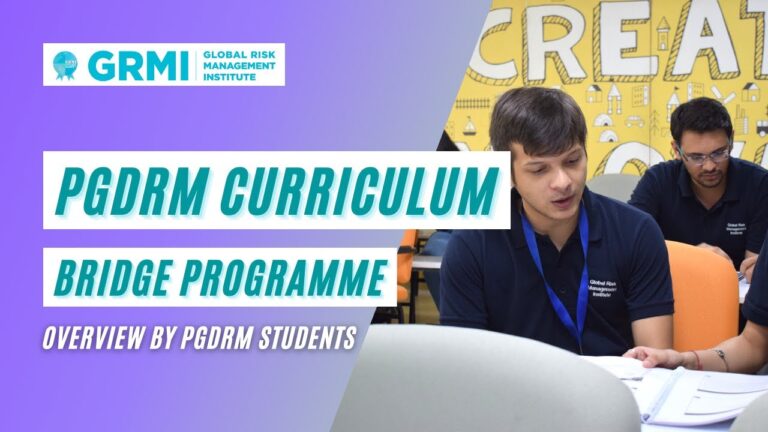
Watch the video below to see PGDRM students explain how the Bridge Programme helps learners from different backgrounds understand risk management clearly.
Conclusion
Risk education has evolved alongside changing business expectations. Institutions that successfully transform classroom learning into corporate capabilities focus on practical, interactive, engaging, and relevant education. This aligns with companies’ reskilling objectives.
To combine structured learning, practical experience, and strategic thinking effectively, look for programmes like GRMI’s PGDRM. Such programmes prepare future professionals to be resilient and workplace-ready, offering more than theoretical knowledge.
FAQ's
Q1: Are risk management courses open to students without finance degrees?
Ans: Yes. Many courses welcome learners from various academic backgrounds, focusing on applied risk understanding.
Q2: How does GRMI ensure practical experience during teaching?
Ans: GRMI’s curriculum includes real-world case studies, simulations, and industry-aligned assignments to provide essential practical exposure.
Q3: What makes the PGDRM program at GRMI successful?
Ans: The program combines theoretical knowledge with practical application, easing the transition from classroom to workplace.
Q4: Will taking a risk management course benefit me as a long-term career choice?
Ans: Absolutely. It helps develop analytical, strategic, and decision-making skills valuable across industries for years.
For any queries, please fill out the form
Tag:risk management
You may also like

Risk Appetite vs Risk Tolerance: Guide for 2026

Best 1-Year Courses After Graduation in 2026

