
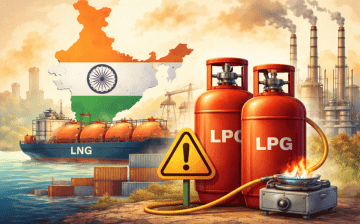
For India, LPG Supply Is a Bigger Concern Than LNG: A Simple Risk-Based Understanding
- Posted by GRMI
- Categories Blog, pgdrm blog
- Date April 13, 2026
For India, LPG Supply Is a Bigger Concern Than LNG: A Simple Risk-Based Understanding
Author: Jayant Palan
India’s energy needs are growing quickly due to rising population, urban expansion, and increasing economic activity, which together create significant pressure on fuel supply systems and long-term energy planning decisions.
While global discussions often highlight liquefied natural gas as an important transition fuel for cleaner energy systems, India currently faces a more immediate challenge in ensuring reliable and affordable liquefied petroleum gas supply for households.
Understanding LPG and LNG in Simple Terms
Although LPG and LNG are both derived from fossil fuels, their uses, storage methods, and supply systems differ significantly, which creates different levels of importance and risk for India’s overall energy system.
LPG is mainly used for cooking in households and small businesses, making it directly connected to daily life, health conditions, and government schemes that aim to provide clean and accessible cooking fuel.
On the other hand, LNG is mostly used in industries, transport systems, and power generation, where demand is driven by large organisations that can better manage price changes and supply fluctuations.
Why LPG Is More Important for India Right Now
India depends heavily on LPG for household energy needs, especially in rural and semi-urban areas, where millions of families rely on cylinders for safe and clean cooking every single day.
Unlike LNG, which is mainly used by industries that can adjust their usage over time, LPG demand remains steady and essential, which makes any disruption much more serious and difficult to manage.
This means that even small issues in LPG supply can quickly affect daily life, making it a high-priority concern for both policymakers and supply chain managers across the country.
Key Risks in India’s LPG Supply Chain
India’s LPG system faces several important risks that must be understood clearly, especially by students and professionals interested in energy, business, and risk management careers.
Major risks include:
Import dependency risk: India imports a large portion of its LPG from other countries, which creates dependence on global markets that are often affected by geopolitical tensions, conflicts, and international trade disruptions.
Price volatility risk: Global oil price fluctuations directly affect LPG prices, which increases the financial burden on the government and sometimes leads to higher costs for consumers across different income groups.
Supply chain disruption risk: Delays in shipping, port congestion, or transportation issues within India can interrupt the supply process, leading to shortages or delays in cylinder deliveries, especially in remote regions.
Policy and subsidy risk: Changes in government subsidy policies or pricing structures can impact affordability and access, creating uncertainty for both consumers and companies involved in LPG distribution and supply operations.
How LNG Risks Are Different
LNG also has risks, including high infrastructure costs, long-term contracts, and dependency on global suppliers, but its impact is mostly limited to industries and large-scale energy users.
Even if LNG prices increase or supply changes, industries can adjust operations, switch fuels, or manage costs, which reduces the immediate impact on everyday life compared to LPG disruptions.
This difference clearly shows why LPG risks are more sensitive and urgent, especially when considering the needs of millions of households across India.
Why This Matters for Society and Economy
LPG supply problems can directly affect household budgets, forcing families to use traditional fuels like wood or coal, which can harm health and increase environmental pollution significantly over time.
From an economic perspective, rising LPG subsidies can increase government spending, which may affect other development priorities and create challenges in managing public finances effectively.
These combined effects show that LPG is not just an energy issue, but also a social and economic concern that requires careful planning and risk management.
What Can Be Done to Reduce These Risks
India can take several practical steps to reduce LPG-related risks and improve supply stability, ensuring that households continue to receive reliable and affordable energy support.
Key solutions include:
Diversifying import sources so that dependence on a few countries is reduced, which can help manage geopolitical and supply-related uncertainties more effectively.
Investing in better storage and transportation infrastructure, which can improve delivery efficiency and reduce delays in both urban and rural areas across the country.
Using technology such as tracking systems and data analysis tools to monitor supply chains, identify risks early, and improve overall decision-making processes.
Building strategic reserves that can be used during emergencies, helping to maintain supply even during global disruptions or sudden demand increases.
Bridging Risk Management and Policy Implementation
Effective risk management in the energy sector requires alignment between policy frameworks and operational execution, ensuring that strategic decisions translate into tangible improvements in supply stability and consumer accessibility.
This involves coordinated efforts between government agencies, private sector participants, and regulatory bodies, all working towards minimising vulnerabilities while supporting India’s broader energy transition and sustainability goals.
Understanding such interconnected risks across global markets, supply chains, and policy environments is central to modern risk management roles, particularly in sectors where uncertainty and volatility are inherent characteristics.
Programmes such as the Post Graduate Programme in Risk Management offered by Global Risk Management Institute equip aspiring professionals with the analytical tools required to assess, manage, and mitigate these complex risks effectively.
Conclusion
India’s energy priorities must reflect the realities of its population and consumption patterns, recognising that LPG supply security represents a critical risk area with direct implications for social stability and economic resilience.
While LNG continues to play an important role in supporting cleaner energy transitions, its strategic importance should not overshadow the urgent need to strengthen LPG supply chains through robust risk management practices and policy interventions.
FAQ's
LPG directly affects household energy access and social welfare, making any disruption more immediate and impactful compared to LNG, which primarily serves industrial and commercial sectors.
Key risks include import dependency, global price volatility, supply chain disruptions, infrastructure limitations, and policy uncertainties affecting subsidy frameworks and distribution efficiency.
LPG supply influences household expenditure, public health outcomes, environmental sustainability, and government fiscal stability, making it a critical component of inclusive economic development strategies.
LNG cannot directly replace LPG because their applications differ significantly, with LPG serving household cooking needs and LNG primarily supporting industrial and energy generation requirements.
India can reduce risks by diversifying imports, improving infrastructure, leveraging technology, building strategic reserves, and implementing data-driven policy frameworks that enhance supply chain resilience.
You may also like

Risk Appetite vs Risk Tolerance: Guide for 2026

Best 1-Year Courses After Graduation in 2026

