How Institutes Teach Risk Management: From Classroom Learning to Corporate-Ready Skills
- Posted by GRMI
- Categories Blog, pgdrm blog
- Date December 27, 2025
How Institutes Teach Risk Management: From Classroom Learning to Corporate-Ready Skills
Organisations seek professionals who can identify, evaluate, and manage risks effectively in an evolving business climate. Therefore, they want structured training through risk management courses focused on developing employable skills.
Historically, training relied mainly on textbooks and academic sources to teach risk management.
However, recent developments have enabled educational institutions to create integrated curricula that prepare students for real business environments.
The following paragraphs outline resources leading institutions use to equip students with tools and methods for a successful transition from classroom to corporate settings.
The Evolution of Risk Management Education
In the past, risk management education was mostly theoretical, covering definitions, formulas, and fixed methodologies. Today, risk management programmes use a student-centred, application-based learning model.
This model simulates corporate environments to help students understand risks across Finance, Operations, Compliance, and Organisation Structure.
Current programmes combine case studies, scenario analyses, simulations, and regulatory perspectives. This prepares students to navigate challenges within modern organisations.
Foundation Building Through Academic Learning
A solid grasp of conceptual principles forms the foundation of successful risk professionals. Students begin with classroom learning on Risk Identification, Qualitative and Quantitative Risk Assessment, Enterprise Risk Management Frameworks, and Governance Structures.
Advanced risk management programmes, like those from the Association of Certified Fraud Examiners (ACFE), offer interactive learning environments.
Faculty members with industry or regulator experience help students relate theory to market realities by discussing corporate failures, financial events, and regulatory responses.
A key goal is to develop students’ analytical thinking to assess diverse risk environments, rather than memorise concepts.
Practical Learning – Experience Through Case Studies and Simulations
Advanced risk management programmes use many case studies to provide practical learning.
Students analyse real events such as Market Crashes, Operational Failures, Security Breaches, and Compliance Issues to understand modern risk management.
Many programmes also include simulation exercises that replicate the roles of Risk Managers, Board Members, and Regulators.
This experiential learning enhances decision-making skills and prepares students for corporate pressures.
Preparation for Corporate Workforce Through Skill Sets
Corporations require not only technical skills but also communication, report writing, stakeholder management, and ethical judgement.
Institutes train learners to communicate risk insights clearly to senior executives and decision-makers.
Professional risk management class also teaches industry tools such as risk dashboards, heat maps, stress testing models, and scenario planning.
Structured assignments and presentations build learners’ confidence and professional competence for the workforce.
Integration of Industry with Corporate Experience
Leading institutions maintain strong industry connections. Guest speakers, real-time projects, internships, and corporate workshops form part of modern risk management programmes.
This exposure familiarises learners with current industry expectations and trends.
GRMI aligns academic coursework with industry needs.
Its risk management courses reflect corporate realities, not outdated academic theories.
GRMI and Its PGDRM Course: Strong Collaboration Between Education and Industry
The Global Risk Management Institute (GRMI) uses an industry-focused approach to risk education. GRMI’s flagship programme, the Post Graduate Diploma in Risk Management (PGDRM), develops corporate-ready risk professionals from student level.
By combining theory with practice, PGDRM integrates classroom learning with workplace applications. Topics include Financial, Enterprise, Operational, Compliance, and Strategic Risk Management.
Every PGDRM student works on practical case studies, simulations, and projects that mimic real corporate risk scenarios. The programme equally emphasises decision-making, analytical skills, and ethical responsibility.
With faculty experts and a corporate-based approach, PGDRM graduates enter the workforce ready for demanding roles.
Every PGDRM student works on practical case studies, simulations, and projects that mimic real corporate risk scenarios.
The programme equally emphasises decision-making, analytical skills, and ethical responsibility.
With faculty experts and a corporate-based approach, PGDRM graduates enter the workforce ready for demanding risk management roles.
The programme includes a two-month internship to provide real organisational exposure.
In 2025, GRMI achieved a 98% placement rate. Graduates secured roles in top companies across various sectors. This strong placement reflects the programme’s industry relevance and the high demand for skilled risk management professionals.
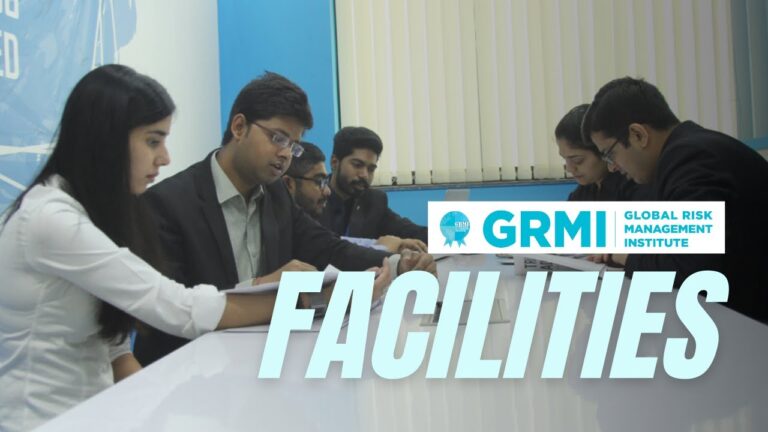
Watch the video below to know more:
Changing Importance of Risk Management Education
Risk management education has evolved from theory-only to skill development aligned with organisational goals.
Many institutes now focus on producing professionals with critical thinking, strategic action, and uncertainty management skills.
Industry-specific courses and hands-on structures like GRMI’s PGDRM equip students with knowledge and skills to succeed in modern corporations.
Choosing the right institute is crucial to turning risk management theory into practical corporate capability.
FAQ's
Q1: What is the difference between modern and traditional risk management courses?
Ans: Modern courses use experiential, case-based, and simulation learning plus industry exposure. Traditional courses mainly focus on theoretical instruction.
Q2: What skills does a professional risk management course develop?
Ans: These courses develop analytical thinking, decision-making, risk communication, and problem-solving skills.
Q3: Why is GRMI considered a strong risk management education provider?
Ans: It offers industry-aligned content, practical projects, and a PGDRM that prepares students for corporate roles.
Q4: Does GRMI provide practical training through its PGDRM course?
Ans: Yes. PGDRM includes live case studies, simulations, and projects designed for today’s corporate risk environment.
Q5: Who should consider enrolling in a risk management course?
Ans: Graduates, finance professionals, and MBA holders should consider it.
For any queries, please fill out the form
You may also like

Start Finance Career After Graduation Without MBA