
I Dropped out of MBA and don’t Know What to Do
- Posted by GRMI
- Categories Blog, pgdrm blog
- Date December 3, 2025
I Dropped out of MBA and don't Know What to Do
Many of us face constant pressure about career choices, wondering which path will offer growth and stability. A common belief is that an MBA is essential to work in large corporations, consulting firms, or the Big Four.
However, not everyone finds an MBA suits their skills, knowledge, or career goals. Some students drop out after admission, feeling uncertain and lost about the next steps.
The hype around MBA programmes often overshadows alternative pathways that provide practical skills, industry experience, and faster employability. Not all students need a traditional MBA to achieve professional success.
Specialised programmes, such as the Post Graduate Diploma in Risk Management (PGDRM) at the Global Risk Management Institute (GRMI), offer focused knowledge in enterprise risk, cyber security, audit, and compliance. These courses combine classroom learning with real-world projects, mentorship, and internship opportunities, bridging the gap between theory and practice.
For students reconsidering their career paths or seeking faster industry-ready growth, PGDRM provides a credible, practical, and globally relevant alternative to conventional postgraduate degrees.
The Challenge of Dropping Out
Dropping out does not mean failure; it often reflects a mismatch between the chosen course and career objectives. Many MBA students struggle with rigorous prerequisites, especially in accounting, finance, or analytics, if their undergraduate background does not match. Without preparation, keeping up with coursework can feel impossible.
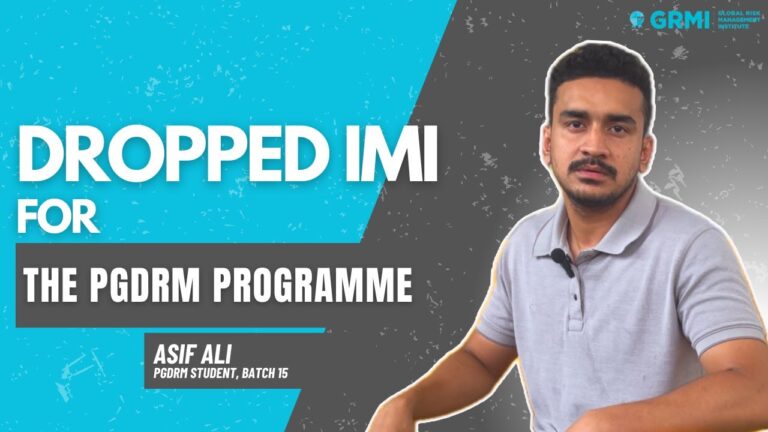
Consider the story of Asif Ali from PGDRM Batch 15. Asif initially pursued an MBA after completing his undergraduate degree. He realised that he lacked practical skills and exposure in risk management, which left him unprepared for the corporate world. Facing uncertainty, Asif explored alternative postgraduate programmes that combined academic learning with industry experience.
The Reality of MBA Programmes: Challenges and Gaps
While many aspire to an MBA for career growth, recent data highlights significant challenges:
In India, over 50% of MBA graduates struggle to find jobs that match their specialisation, according to the Economic Times 2024 report.
Many graduates join programmes without prior work experience, leading to a skills gap between classroom learning and industry requirements.
The average starting salary for MBA graduates in India is around ₹6–8 lakh per annum, which may not justify high tuition fees at premium institutes. (Naukri Learning, 2024)
Reports suggest 30–40% of MBA students feel unprepared for technical roles or risk-focused corporate positions, limiting employability in specialised sectors.
These realities show that an MBA may not suit everyone.
Why Consider PGDRM by GRMI?
The Post Graduate Diploma in Risk Management (PGDRM) is designed for students seeking hands-on, industry-relevant skills. Unlike traditional degrees, PGDRM merges classroom learning with real-world experience.
Curriculum Highlights
- Risk & Governance: Enterprise risk, IT risk, audit, and compliance frameworks.
- Cyber & Emerging Risks: Cybersecurity, third-party risk, and ESG risk management.
- Practical Learning: Case studies, industry projects, and applied assessments.
- Industry Exposure: Internships offering corporate experience.
Who Can Apply
Graduates from any discipline with 50% or above in their bachelor’s degree can apply. No prior finance or risk experience is required.
Placement and Career Support
GRMI provides mentorship, networking opportunities, and placement support. PGDRM alumni have joined top consulting firms, corporate risk departments, and advisory roles. Students gain competitive packages and direct exposure to industry practices.
Official student experiences, like Asif Ali’s story, demonstrate how the course transforms career paths.
Benefits of Choosing PGDRM
- Career Direction: Provides clarity for students unsure after dropping out of traditional courses.
- Practical Skills: Offers applied knowledge through live projects, case studies, and internships.
- Industry Connections: Builds networks with Chief Risk Officers and other senior professionals.
- Global Opportunities: Risk management skills are applicable internationally.
- Higher Employability: Graduates often secure roles in risk consulting, IT audit, cybersecurity, and compliance
Success Story: Asif Ali
Asif Ali, a B.Com (Honours) graduate in Accounts and Finance from Calcutta University, initially planned to pursue an MBA. He successfully cleared the CAT exam and aimed to join a top IIM. However, after reflection, he realised an MBA did not align with his career goals.
Seeking a more specialised and industry-relevant path, Asif joined the Post Graduate Diploma in Risk Management (PGDRM) at GRMI. He chose the programme for its strong focus on practical risk management skills, industry projects, and placement support. The curriculum covers enterprise risk, IT and cybersecurity risk, audit, and compliance frameworks, ensuring students gain technical expertise and corporate exposure.
Asif highlights the PGDRM’s key advantages: a hands-on internship, mentorship from industry leaders, exposure to global risk practices, and networking opportunities with senior risk professionals. He notes that these elements helped him connect academic learning with real-world application.
His message to future students is clear: “Understand your career goals carefully before choosing a course. Practical, industry-focused programmes like PGDRM provide faster growth and meaningful opportunities.”
To watch Asif Ali share his journey from considering an MBA to joining PGDRM, view the official video here:
Admission Requirements for PGDRM
- Bachelor’s degree from a recognised university
- Minimum 50% in undergraduate study
- Statement of Purpose (SOP) detailing career goals
- Resume or portfolio highlighting prior experience (if any)
- Interviews or group discussions for shortlisted candidates
- Work experience is optional but helpful
Conclusion
Dropping out of an MBA does not close doors. Alternative postgraduate programmes like PGDRM by GRMI provide direction, industry-relevant skills, and employability.
The programme blends technical risk knowledge with governance, audit, and compliance frameworks. Students gain practical exposure, mentorship, and networking opportunities. Alumni like Asif Ali demonstrate how PGDRM can transform uncertainty into career growth.
For students uncertain about their post-graduation path, PGDRM represents a structured, industry-aligned solution that offers skills, experience, and employability.
FAQ's
Q1. I left the MBA programme. What should I do next?
Ans: Take time to reflect on your career goals. Explore postgraduate programmes, professional certifications, or skill-based courses.
Q2. Are there alternatives to an MBA that provide practical skills?
Ans: Yes. Options include PG diplomas, specialised master’s degrees, and professional certifications in risk management, finance, IT, marketing, analytics, or design.
Q3. Can dropping out of an MBA harm my career?
Ans: Not necessarily. Many students switch to more focused or industry-oriented courses to gain practical skills and improve employability.
Q4: How can I choose the right course for me?
Ans: Assess your interests, skills, career goals, and industry demand. Seek guidance from mentors, alumni, or career advisers.
Q5: Is PGDRM a good option after leaving an MBA?
Ans: Yes. PGDRM at GRMI offers industry projects, mentorship, placement support, and practical risk management skills.
For any queries, please fill out the form
You may also like

Start Finance Career After Graduation Without MBA