India–AI Impact Summit 2026: Highlights and Emerging Career Opportunities
India–AI Impact Summit 2026: Highlights and Emerging Career Opportunities
Image Source: ebnwstory
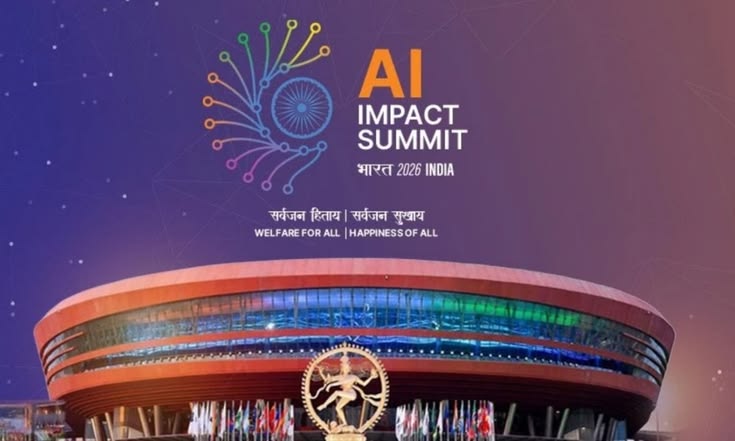
The India–AI Impact Summit 2026 is ongoing at Bharat Mandapam, New Delhi, and will continue until 20 February 2026. This is the first global AI summit hosted in the Global South, bringing together technology leaders, policymakers, innovators, and researchers. Anchored on the three Sutras – People, Planet, and Progress, the summit focuses on responsible, inclusive, and people-centric AI. It aims to demonstrate how AI can drive economic growth, social empowerment, and sustainable innovation in India and internationally.
The summit has drawn attention due to its scale and global participation. Over 700 proposals have been submitted for panels, workshops, and demonstrations. Notable speakers include Sam Altman (OpenAI) and Sundar Pichai (Alphabet Inc.), alongside Indian leaders and industry experts.
Flagship initiatives like AI for ALL, AI by HER, and YUVAi showcase socially impactful AI solutions, encouraging innovations by youth and women. Pre-summit regional conferences in Meghalaya, Gujarat, Odisha, Kerala, and Telangana ensured alignment of national priorities with local needs.
AI’s Sectoral and Economic Impact
The summit highlights that AI adoption is reshaping multiple sectors and creating new career opportunities. Some of them are given as follows:
- In healthcare, AI improves access through telemedicine, predictive diagnostics, and medical image analysis. Automated testing and chatbots reduce delays in treatment.
- In finance, AI enhances fraud detection, personalised credit scoring, and customer service chatbots.
- Agriculture benefits from AI-powered crop monitoring, irrigation prediction, and market forecasting.
- Education sees personalised learning, adaptive content, and AI-based tutoring breaking linguistic barriers.
- Even governance benefits, with AI improving smart city management, judicial translations, and public service delivery.
The economic impact is significant. Organisations now seek professionals capable of interpreting AI outputs, managing risks, and implementing solutions efficiently. AI adoption is creating roles in development, analytics, ethics, governance, and operational oversight, demanding a combination of technical and strategic skills.
Emerging Career Paths in the AI Era
The India–AI Impact Summit highlights that AI-driven careers are diverse and evolving. Some prominent emerging roles include:
- AI developers and machine learning engineers – designing and building AI models
- Data analysts and AI project managers – translating data insights into strategies
- AI ethics and policy specialists – ensuring responsible, fair, and safe AI deployment
- Operational and governance professionals – monitoring processes, compliance, and performance
These roles share a common need: understanding, monitoring, and mitigating risks in AI systems. This naturally leads to risk management as a key career path in an AI-driven economy.
Risk Management: A Strategic Career Opportunity
AI brings efficiency but also introduces operational, ethical, and regulatory challenges. Organisations require experts to identify, evaluate, and mitigate these risks, ensuring projects are safe, compliant, and effective.
Key roles in AI-focused risk management include:
- Model Risk Analyst – assesses AI models for bias, accuracy, and regulatory compliance
- Operational Risk Manager – monitors AI-driven processes to prevent disruptions
- AI Compliance Officer – ensures ethical and legal adherence in AI deployment
- Cyber Risk Specialist – protects data and AI systems from breaches
Required skills include analytical thinking, problem-solving, regulatory awareness, and ethical reasoning. Professionals in risk management bridge the gap between AI innovation and responsible implementation.
Relevance across sectors:
- Banking and finance: fraud detection, operational oversight, and AI governance
- Healthcare: AI diagnostics and predictive tools require ethical monitoring
- Agriculture and climate analytics: AI forecasting demands operational risk assessment
- Consulting and advisory: ensures AI projects comply with regulations and governance standards
Risk management is thus not just a support function, but a strategic career shaping organisational decisions and safeguarding AI adoption.
Conclusion
The India–AI Impact Summit 2026 demonstrates AI’s transformative potential in governance, industry, and society. It highlights emerging careers in technology, analytics, governance, and operational oversight. Among these, risk management emerges as a strategic path, connecting AI innovation with ethical and regulatory accountability.
FAQ's
- Which sectors are being transformed by AI in India?
Healthcare, finance, agriculture, education, governance, and smart cities are most impacted. - Why is risk management important in AI careers?
AI introduces operational, ethical, and regulatory risks needing expert oversight. - What are emerging roles in AI-driven industries?
AI developers, data analysts, ethics officers, cybersecurity specialists, and operational risk managers. - How does the India–AI Impact Summit contribute to careers?
It highlights trends, skills, and opportunities for AI-driven roles across sectors.
You may also like

Alternative Career Options for UPSC Aspirants in 2026