IT Diploma or IT Degree – Which One is Best
- Posted by GRMI
- Categories Blog, pgdtrm blog
- Date December 16, 2025
IT Diploma or IT Degree- Which One is Best
The Information Technology sector continues to grow across every industry. Banking, healthcare, retail, logistics, and consulting now rely heavily on digital systems. Even non-technical roles increasingly require basic technology knowledge and software skills.
Students completing their 12th grade often explore careers in IT. Two common education paths stand out: an IT Diploma or an IT Degree. Each option offers distinct advantages, learning depth, and career outcomes.
This article compares the IT diploma courses and an IT Degree. It also explains how advanced programmes like PGDTRM by GRMI and NIIT University fit into long-term careers.
Understanding an IT Diploma After 12th
The Information technology diploma is a vocational programme available after 10th or 12th grade. Most diploma courses run for two to three years.
These programmes focus on practical skills and industry-ready training. Students learn core IT concepts with strong hands-on exposure.
What Does an IT Diploma Cover?
Diploma curricula usually include:
- Programming basics such as C++ or Java
- Web development fundamentals
- Database management concepts
- Computer hardware and system maintenance
- Networking basics
Eligibility generally requires completion of 10th or 12th grade with minimum qualifying marks.
Benefits of an IT Diploma
- Faster industry entry through shorter course duration
- Lower education costs compared to degree programmes
- Job-focused training aligned with entry-level roles
- Strong practical exposure through labs and projects
Career Opportunities After an IT Diploma
Diploma holders often begin with entry-level technical roles, such as:
- Programmer
- Network Technician
- IT Support Specialist
- Web Developer
- Computer or Hardware Technician
- Database Assistant
These roles help students gain experience. Many diploma holders later pursue degrees or certifications for career growth.
Understanding an IT Degree After 12th
An IT Degree offers deeper academic and technical knowledge. These programmes focus on computing theory, system design, and advanced software concepts.
Common degree options include:
- Bachelor of Computer Applications (BCA) – three years
- Bachelor of Science in IT (B.Sc. IT) – three years
- Bachelor of Technology (B.Tech CSE/IT) – four years
What Does an IT Degree Teach?
Degree programmes usually cover:
- Programming languages and software development
- Database management systems
- Computer networks and operating systems
- Data structures and algorithms
- Cybersecurity fundamentals
- Software engineering principles
- AI and machine learning basics
Benefits of an IT Degree
- Comprehensive technical understanding
- Eligibility for higher studies and specialisations
- Better access to leadership roles
- Stronger employer recognition across industries
Career Opportunities After an IT Degree
Graduates often move into roles such as:
- Software Developer
- Cybersecurity Analyst
- System Analyst
- Network Engineer
- IT Consultant
- Data Analyst or Scientist
These roles offer higher growth potential, especially with experience or postgraduate education.
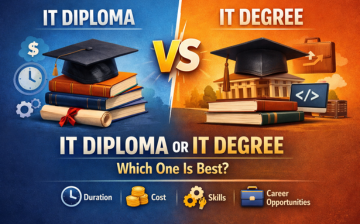
Key Differences: IT Diploma vs IT Degree
Aspect | IT Diploma | IT Degree |
Duration | 2–3 years | 3–4 years |
Cost | More affordable | Higher investment |
Curriculum | Skill-focused and practical | Theory with practical depth |
Learning Style | Hands-on training | Balanced academic approach |
Career Start | Entry-level technical roles | Broader professional roles |
Growth Scope | Needs certifications later | Strong long-term progression |
Recognition | Limited to specific roles | Widely recognised |
This comparison helps students align education choices with career goals.
As students progress in their IT careers, industry expectations also evolve. Organisations now look beyond technical execution.
They value professionals who understand risk, governance, and regulatory accountability.
This shift has increased demand for structured postgraduate programmes that combine technology with enterprise risk awareness.
Where Does PGDTRM by GRMI–NIIT University Fit?
Many IT careers now require risk awareness, governance knowledge, and audit readiness. Technical skills alone no longer ensure long-term growth.
The Post Graduate Diploma in Technology Risk Management (PGDTRM) addresses this gap.
What Is PGDTRM?
PGDTRM is a one-year full-time postgraduate programme. Global Risk Management Institute (GRMI) delivers it jointly with NIIT University.
The programme combines technology understanding with risk, governance, and compliance expertise.
What Does PGDTRM Cover?
- IT General Controls (ITGC)
- Cybersecurity governance
- Technology risk management
- Audit and compliance frameworks
- NIST, ISO 27001, and COBIT standards
Why PGDTRM Matters for IT Careers
PGDTRM prepares students for roles beyond technical execution. It supports careers in:
- Technology risk management
- Cyber governance and GRC
- IT audit and assurance
- Digital risk consulting
Graduates access 20+ specialised job roles. The programme includes six months of classroom learning and a six-month paid internship.
This collaboration blends GRMI’s risk expertise with NIIT University’s technology strength.
Which Option Should You Choose?
Your decision depends on personal goals and circumstances.
- Choose an IT Diploma for quick employment and hands-on skills.
- Choose an IT Degree for deeper knowledge and leadership potential.
- Choose PGDTRM for governance, audit, and risk-focused technology careers.
Many students combine paths. A diploma or degree followed by PGDTRM creates strong career momentum.
Final Thoughts
Both IT diplomas and IT degrees offer valuable career entry points. The right choice depends on learning style, time horizon, and career ambition.
As organisations demand trusted technology professionals, programmes like PGDTRM by GRMI and NIIT University provide a strategic edge. They connect technology skills with enterprise risk, governance, and long-term career stability.
FAQ's
Q1. Is an IT diploma enough for a long-term career?
Ans: It helps start quickly, but growth often needs degrees or certifications.
Q2. Is an IT degree better than a diploma?
Ans: Degrees offer broader opportunities and stronger long-term progression.
Q3. Who should consider PGDTRM?
Ans: Graduates seeking careers in technology risk, cyber governance, or IT audit.
Q4. Can PGDTRM follow an IT diploma or degree?
Ans: Yes, PGDTRM suits graduates from both academic paths.
For any queries, please fill out the form
You may also like