Offline Financial Risk Management Courses You Can Take in 2026
- Posted by GRMI
- Categories Blog, pgdrm blog
- Date December 1, 2025
Offline Financial Risk Management Courses You Can Take in 2026
An effective career in finance requires practical skills, technical expertise, and an understanding of how organisations detect, assess, and manage risks. Recent research by the World Economic Forum indicates that risk management and analytical skills are among the top 10 skills employers seek by 2026, making specialised training increasingly valuable.
This is why many learners are opting for financial risk management courses, which provide offline learning.
If you want to start or advance your career in risk analysis, credit risk, operational risk, or enterprise risk, consider offline risk management courses.
A full list of top offline programmes for 2026, along with an introduction to the PGDRM programme at GRMI, is provided below.
Why prefer offline financial risk management courses?
Offline programmes allow learners to study directly with industry professionals and mentors. Many students prefer this method as it builds confidence through classroom interaction, workshops, and real-time feedback.
Bankers, insurance professionals, consultants, fintech, or corporate finance employees typically choose offline courses for three main reasons:
- Organised learning structure: Offline programmes follow a set plan, helping learners stay consistent and focused.
- Face-to-face interaction: Classroom discussions clarify complex risk models, scenario analysis, fraud risk assessment, and enterprise frameworks.
- Stronger peer network: In-person courses allow group work, collaboration, and networking opportunities, which support long-term career growth.
Classroom learning also encourages teamwork, provides immediate feedback, and promotes peer interaction — factors shown to improve performance in group and practical tasks.
Best offline risk management courses to consider in 2026
These classroom programmes focus on applied learning, industry exposure, and preparation for real-world roles.
- Post Graduate Diploma in Risk Management (PGDRM) – GRMI
GRMI’s PGDRM is a highly regarded classroom-based programme in risk management. It is popular among finance students and professionals because it covers risk frameworks used by leading organisations.
Major Highlights of GRMI-PGDRM:
- Full-time, offline programme
- Curriculum designed by global risk practitioners
- Covers enterprise, operational, credit, and market risk, plus quantitative tools
- Hands-on projects, simulations, and case studies
- Strong industry mentorship and recruiter connections
PGDRM focuses on practical application rather than theory. Students gain knowledge in risk governance, fraud prevention, regulatory standards, and data-driven risk decision-making.
GRMI’s PGDRM curriculum includes modules on Regulatory Compliance, Data Analytics, and Financial Risk Management, providing in-demand skills such as compliance readiness, quantitative risk modelling, and data-driven risk analysis. It also covers Financial Reporting Risk and Internal Controls, equipping students with practical knowledge in financial modelling, risk quantification, and analysis.
- University-based Financial Risk Certificate Courses
Many Indian universities provide classroom courses teaching financial risk basics, regulatory knowledge, and analytical tools. Topics typically include:
- Credit appraisal
- Financial statement analysis
- Market risk fundamentals
- Risk modelling principles
- Regulatory frameworks
These courses suit students starting careers in finance or professionals seeking foundational skill enhancement.
- Investment and Finance Risk Workshops
Short-term workshops offer practical insights into:
- Portfolio risk
- Investment analysis
- Stress testing
- Scenario modelling
- Portfolio diversification strategies
Weekend-based workshops suit working professionals wanting skill upgrades along with committing to long-term courses.
Key Skills Gained Through Offline Risk Management Courses
Offline risk management courses develop analytical and strategic skills, including:
- Market and credit trend analysis
- Risk metrics and indicators
- Knowledge of regulatory frameworks
- Practical use of financial software
- Problem-solving under uncertain conditions
- Enterprise-level strategic thinking
These skills open opportunities as risk analyst, credit analyst, compliance officer, enterprise risk associate, or financial consultant.
This is why many learners are opting for financial risk management courses, which provide offline learning.”
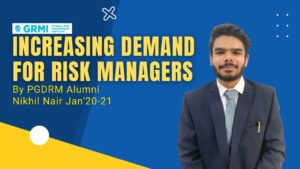
Hear from Nikhil Nair (PwC) on why demand for risk-management roles is rising globally:
Conclusion
Offline financial risk management courses offer formal learning, mentoring, and real-world exposure, boosting confidence to handle financial challenges.
Among these, GRMI’s PGDRM stands out with its industry-focused curriculum and classroom training, preparing students for diverse risk management roles.
For students starting their careers or professionals advancing expertise, offline courses provide analytical skills, decision-making ability, and a strong foundation in financial risk.
FAQ's
Q1: Do offline financial risk management courses help beginners?
Ans: Yes. Guided learning and support make it easier for beginners to understand concepts and risk frameworks step by step.
Q2: Is GRMI-PGDRM effective for building a risk management career?
Ans: Yes. Its specialised curriculum, industry-focused sessions, and emphasis on enterprise and financial risk make it a strong career choice.
Q3: How long do offline risk management courses last?
Ans: Durations vary from short-term workshops lasting a few weeks to full-time diplomas lasting six months to one year.
For any queries, please fill out the form
You may also like

Start Finance Career After Graduation Without MBA