
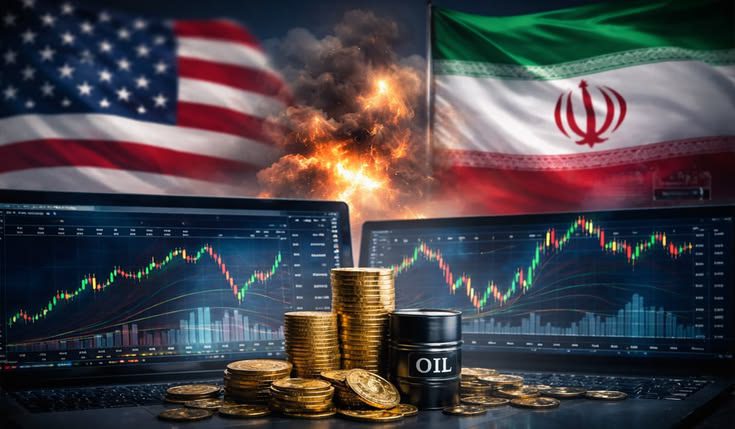
Iran–US Tensions: Strait of Hormuz Impact & Global Risk
- Posted by GRMI
- Categories Blog, pgdrm blog
- Date April 9, 2026
Iran–US Tensions: Strait of Hormuz Impact & Global Risk
Overview
The Iran–US tensions and the reopening of the Strait of Hormuz highlight how global events impact oil supply, markets, and economies. This blog explains developments, global and India impact, and key risk insights from the situation.
Strait of Hormuz Reopens Amid Iran–US Ceasefire: What It Means for the World, India, and Global Risk Today
Strait of Hormuz Reopens: A Moment of Relief, Not Resolution
The Strait of Hormuz is reopening after recent disruptions, marking a crucial development in the ongoing Iran–US ceasefire situation today.
This move comes after intense negotiations, rising tensions, and growing concerns about global energy supply and maritime safety across the region.
While markets may see this as a positive signal, the underlying risks remain, making this more of a pause than a permanent solution.
Ships are expected to move with caution, as coordination with regional authorities still plays an important role in ensuring safe passage.
This development signals temporary stability, but the broader geopolitical situation continues to carry uncertainty and potential volatility for the world.
What Led to This Turning Point
The ceasefire emerged after days of escalating conflict involving Iran, the United States, and allied forces across the Middle East region.
Missile attacks, military responses, and regional involvement created a highly unstable environment affecting both security and global markets.
At one stage, tensions around the Strait of Hormuz disrupted shipping activity, raising concerns about energy flow and trade stability.
Diplomatic efforts from multiple countries contributed to the ceasefire, including negotiations aimed at reducing conflict and restoring dialogue.
This pause reflects a complex mix of military pressure, diplomacy, and global economic concerns shaping decisions today.
The Strait of Hormuz: Why It Matters So Much
The Strait of Hormuz plays a critical role in global energy movement, handling a significant portion of crude oil shipments daily.
Any disruption in this narrow passage can directly impact oil availability, pricing, and supply chains across continents almost immediately.
Recent tensions led to reduced shipping movement, creating concerns among traders, insurers, and governments worldwide.
Even during the ceasefire, cautious navigation continues as stakeholders assess safety conditions before resuming full-scale maritime operations.
Global Market Reaction and Economic Signals
Global markets reacted quickly to ceasefire developments, with stock indices showing positive movement while oil prices dropped significantly.
Lower oil prices reflect reduced immediate risk, but volatility remains as traders respond to evolving geopolitical signals and uncertainties.
Energy markets stay highly sensitive to developments in this region due to its strategic importance in global supply chains.
Financial markets continue adjusting expectations as investors evaluate whether the ceasefire will hold or face renewed escalation.
This shows how geopolitical developments directly influence economic confidence, investor sentiment, and global financial stability in real time.
What This Means for India
India remains closely connected to developments in the Middle East due to its reliance on imported crude oil for energy needs.
Any fluctuation in global oil prices can directly impact fuel costs, transportation expenses, and inflation across sectors in the country.
A stable Strait of Hormuz helps India maintain steady supply chains, while disruptions could increase economic pressure significantly.
The government and industries continue monitoring the situation closely to manage risks and maintain economic balance effectively.
This reinforces how international events create both direct and indirect effects on domestic economies like India.
The Risk Perspective: What We Learn From This Situation
This scenario highlights how geopolitical events transform into financial, operational, and strategic risks across the globe.
A regional conflict can disrupt supply chains, affect energy security, and influence policy decisions across multiple countries simultaneously.
Businesses must prepare for such uncertainties by building flexible strategies and continuously monitoring global developments.
Risk today connects politics, economics, security, and technology in complex and interconnected ways.
Understanding these linkages helps individuals and organisations respond better to uncertainty and make informed decisions in dynamic environments.
Why Understanding Such Events Matters
Following such developments helps you understand how global events directly impact oil prices, inflation, markets, and everyday economic decisions.
It also helps students and professionals connect current affairs with real-world outcomes, especially in exams, interviews, and industry roles.
This approach builds practical awareness, enabling better analysis of risks, opportunities, and decisions in real-world scenarios.
Stay Informed with GRMI
For more such insights on global developments and their real-world impact, stay tuned with the Global Risk Management Institute website.
The PGDRM programme offered by GRMI helps learners understand and analyse such situations with a structured and practical approach.
Final Thoughts
The reopening of the Strait of Hormuz under a ceasefire brings temporary relief, but the situation remains delicate and closely monitored worldwide.
From energy markets to economic stability, the impact of this conflict continues to influence countries, businesses, and individuals globally.
Staying aware of such developments helps individuals understand real-world implications of global events and prepare for future uncertainties.
FAQ's
It restores critical oil supply routes and reduces immediate global market pressure.
No, the ceasefire is temporary and risks of escalation still remain.
It reduces immediate pressure but keeps markets volatile due to uncertainty.
It affects fuel prices, inflation, and economic stability due to import dependence.
It helps understand real-world risk, global interconnections, and decision-making under uncertainty.
You may also like

Risk Appetite vs Risk Tolerance: Guide for 2026

Best 1-Year Courses After Graduation in 2026

