AI & Cyber Risk: Mythos Debate and Future of Risk Careers
AI & Cyber Risk: Mythos Debate and Future of Risk Careers
Artificial Intelligence is rapidly transforming cybersecurity and risk management. The ongoing Mythos AI debate highlights how powerful AI models can detect software vulnerabilities and reshape the way organisations handle cyber threats. While this raises concerns about control and security, it also creates new opportunities in risk management. In this context, GRMI’s PGDRM programme equips students with practical skills in cyber, enterprise, and technology risk, preparing them for high-demand careers in a digitally evolving world.
AI, Cyber Risk, and the Mythos Debate: What It Means for the Future of Risk Management Careers
Artificial Intelligence (AI) is no longer just a tool for automation or content generation. It is rapidly becoming a core part of global cybersecurity, business decision-making, and national security systems. Recently, a powerful AI model called “Mythos,” reportedly linked to Anthropic, has sparked widespread discussion in technology and policy circles.
The reason? It is believed that this AI can identify critical vulnerabilities in software systems—something that traditionally required highly skilled cybersecurity experts.
This has raised an important question:
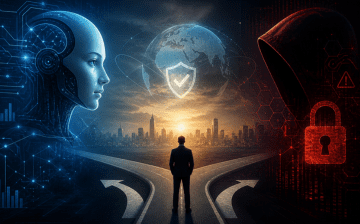
Is AI making systems safer, or creating new risks?
To understand this, let’s break it down simply.
What is the Mythos AI debate about?
“Mythos” refers to an advanced AI model that can analyse software and detect security weaknesses. These weaknesses are the same types of flaws hackers try to exploit in real systems.
Because of this capability, reports suggest that the model is:
- Not publicly released
- Restricted for controlled use
- Possibly shared only with select organisations and government bodies
This immediately sparked global discussion.
Why is this in the news?
The topic gained attention for three key reasons:
1. “Too powerful to release” claim
When a company suggests an AI model is too sensitive or dangerous for public release, it raises serious concerns about transparency and control.
2. Impact on cybersecurity
Cybersecurity is a critical global issue. If AI can identify system vulnerabilities, it can:
- Help fix security gaps faster
- Or potentially be misused to exploit systems
This dual nature makes it highly important.
3. Global control and access
If only a few organisations or countries have access to such powerful AI systems, it raises concerns about technological dependency and imbalance of power.
The reality: AI is not just a threat or a solution
A common misunderstanding is that AI is either “good” or “dangerous.” In reality, it is both.
Risk side:
- AI can be used to find vulnerabilities faster
- It can support more advanced cyberattacks
Defence side:
- It helps detect threats early
- Improves software security
- Strengthens cyber defence systems
This means AI is not replacing cybersecurity—it is transforming it.
The real issue is not AI—it is risk
The most important takeaway from the Mythos debate is not fear of AI, but understanding risk management in a digital world.
The real concerns are:
- Who controls advanced AI systems
- Who has access to vulnerability data
- How dependent countries become on external technologies
This is where the field of risk management becomes critical.
Why India needs skilled risk professionals
India is rapidly digitising across sectors like banking, insurance, governance, and fintech. This growth also increases exposure to:
- Cyber risks
- Operational risks
- Technology risks
- Data security risks
As AI systems become more powerful, organisations will increasingly need professionals who can:
- Identify emerging risks
- Assess system vulnerabilities
- Build risk mitigation strategies
- Ensure compliance and governance
This is exactly where structured risk education becomes important.
How GRMI’s PGDRM programme fits into this future
The Post Graduate Diploma in Risk Management (PGDRM) offered by GRMI (Global risk management institute) is designed to prepare students for exactly these kinds of evolving challenges.
Unlike traditional programmes, PGDRM focuses on real-world risk environments, including:
1. Cyber and Technology Risk
Students learn how modern systems face threats from AI-driven cyber risks and how to manage them effectively.
2. Enterprise Risk Management
Understanding how organisations identify, measure, and control risks across business operations.
3. Financial and Operational Risk
Covering how risks impact financial systems, business continuity, and operational structures.
4. Industry-Relevant Learning
The programme is aligned with how industries are actually evolving—not just theoretical models.
Career opportunities after PGDRM
With AI and cybersecurity becoming central to business strategy, demand for risk professionals is growing across sectors.
Graduates can explore roles such as:
- Cyber Risk Analyst
- Technology Risk Consultant
- Enterprise Risk Associate
- Compliance and Governance Specialist
- Operational Risk Manager
These roles are becoming increasingly important in:
- Banking and financial services
- IT and technology firms
- Consulting organisations
- Insurance companies
The future of risk management is directly linked to the future of technology.
Moving beyond hype: building real capability
The Mythos AI discussion is not just about one model. It represents a larger shift in how the world is changing:
- Technology is becoming more powerful
- Risks are becoming more complex
- Decision-making requires deeper expertise
Instead of focusing on fear or hype, the focus must be on building capability and skilled professionals who can manage these risks.
Conclusion
AI is reshaping cybersecurity and risk at a global level. The Mythos debate highlights how powerful these systems have become—and why understanding risk is more important than ever.
For India and for aspiring professionals, the message is clear:
The future belongs to those who understand risk in a technology-driven world.
Programmes like GRMI’s PGDRM are designed to bridge this gap by preparing students for real-world challenges in cybersecurity, enterprise risk, and technology governance.
As the digital world evolves, risk professionals will not just support businesses—they will help shape the future of secure and responsible innovation.
FAQ's
It refers to discussions around a powerful AI model that can detect software vulnerabilities and its potential risks and restrictions.
Because it is reportedly too powerful to be publicly released and is linked to cybersecurity and control concerns.
AI is not just a threat—it is also a tool that helps strengthen cybersecurity by detecting and preventing attacks.
Because AI increases both opportunities and risks, making structured risk assessment essential for organisations.
PGDRM prepares students for careers in cyber, technology, and enterprise risk by teaching practical, industry-focused risk management skills.
You may also like

Best 1-Year Courses After Graduation in 2026

Enterprise Risk Management Framework: Guide for 2026