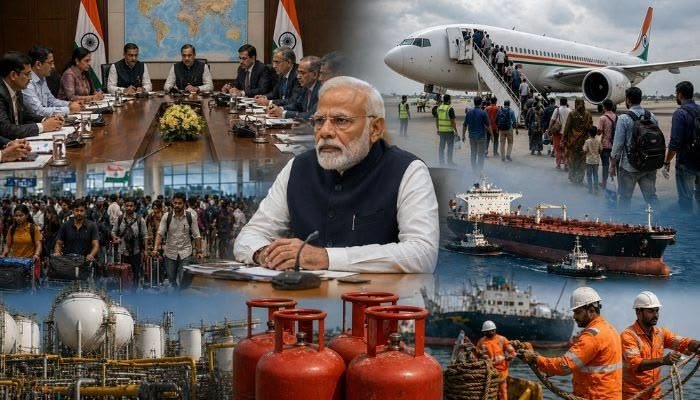
PM Modi’s Oil Crisis Appeal: Economic Risks & Impact on India
PM Modi’s Oil Crisis Appeal: Economic Risks & Impact on India
Overview:
This blog covers PM Modi’s recent statements on reducing fuel consumption, gold purchases, and foreign travel during the global oil crisis. It explains the economic impact on India, major risk factors such as inflation, forex pressure, supply chain disruption, and the importance of risk management during geopolitical uncertainty.
PM Modi’s Appeal Amid Global Oil Crisis: Key Risks, Economic Impact & What It Means for India
The ongoing geopolitical conflict in West Asia and the disruption around the Strait of Hormuz have started affecting economies across the globe. In response to rising crude oil prices and growing pressure on India’s foreign exchange reserves, Prime Minister Narendra Modi recently appealed to citizens to reduce fuel consumption, avoid unnecessary foreign travel, postpone gold purchases for a year, and revive work-from-home practices wherever possible.
The statement has sparked widespread discussion because it reflects concerns beyond fuel prices. Experts believe the government is preparing the country for a prolonged period of global economic uncertainty caused by disruptions in energy supply chains.
For India, which imports nearly 90% of its crude oil requirements, any major increase in oil prices creates economic pressure across multiple sectors. The current situation highlights how geopolitical events can quickly transform into financial, operational, and economic risks.
What Is Happening Globally?
The conflict involving Iran and the disruption near the Strait of Hormuz have significantly affected global oil movement. The Strait of Hormuz is one of the world’s most critical oil transit routes through which a large portion of global crude exports pass every day.
As tensions escalated, fears of supply shortages pushed crude oil prices sharply higher. Rising energy prices are impacting transportation, manufacturing, aviation, agriculture, and international trade globally.
Several countries have already introduced emergency measures to reduce fuel consumption and protect their economies from rising import costs.
India has so far avoided major fuel price hikes for consumers, but the prolonged crisis is increasing pressure on:
- Oil import bills
- Foreign exchange reserves
- Inflation
- The Indian rupee
- Industrial production costs
This is why the government has started encouraging citizens to adopt fuel-saving and import-reduction measures.
Why Did PM Modi Ask Citizens to Reduce Fuel Use and Gold Purchases?
The Prime Minister’s appeal was mainly focused on conserving foreign exchange reserves and reducing unnecessary imports during a period of global uncertainty.
India spends billions of dollars annually on:
- Crude oil imports
- Gold imports
- Foreign travel spending
- Fertiliser imports
When global oil prices rise, India requires more US dollars to pay for imports. This weakens the rupee and increases economic stress.
To reduce pressure on the economy, PM Modi suggested:
- Using public transport and metros
- Carpooling
- Increasing EV adoption
- Reviving work-from-home and virtual meetings
- Avoiding unnecessary foreign travel
- Reducing gold purchases for one year
- Supporting local products and self-reliance
The message is being viewed as a preventive economic strategy rather than a restrictive policy.
Key Risk Factors Emerging from the Crisis
1. Inflation Risk
One of the biggest risks from rising oil prices is inflation.
Higher fuel prices increase:
- Transportation costs
- Manufacturing expenses
- Logistics charges
- Food prices
As businesses face higher operating costs, consumers eventually pay more for goods and services. Prolonged inflation can reduce purchasing power and slow economic growth.
2. Foreign Exchange Risk
India imports most of its crude oil using US dollars. Rising oil prices increase dollar outflow from the country.
At the same time:
- Gold imports
- Luxury imports
- Overseas travel spending
also consume foreign currency reserves.
If forex reserves decline significantly, the rupee may weaken further, making imports even more expensive.
3. Supply Chain Risk
Global conflicts often disrupt shipping routes and increase freight costs.
Industries dependent on imported raw materials such as:
- Pharmaceuticals
- Electronics
- Chemicals
- Automobile manufacturing
- Packaging and plastics
may face operational disruptions, delayed deliveries, and increased production costs.
This creates both operational and financial risk for businesses.
4. Aviation and Travel Risk
Airlines are among the most affected sectors during oil price shocks because aviation fuel forms a major portion of operational costs.
Possible impacts include:
- Expensive flight tickets
- Reduced international travel demand
- Higher operating losses for airlines
- Pressure on tourism and hospitality sectors
The government’s recommendation to reduce unnecessary foreign travel reflects concerns over both fuel costs and forex outflow.
5. Agricultural and Fertiliser Risk
Fertiliser production and imports are heavily connected to global energy prices.
Rising fertiliser costs can:
- Increase farming expenses
- Raise food prices
- Increase subsidy burden on the government
- Impact rural income and agricultural productivity
This is why the government is promoting natural farming and reduced chemical fertiliser usage.
What Could Be the Possible Solutions?
Promoting Energy Conservation
Encouraging:
- Public transportation
- Carpooling
- Rail freight movement
- EV adoption
- Remote work culture
can help reduce fuel consumption significantly.
Strengthening Renewable Energy
India may further accelerate investments in:
- Solar energy
- Wind energy
- Green hydrogen
- Electric mobility infrastructure
to reduce dependence on imported crude oil.
Increasing Domestic Manufacturing
Promoting “Vocal for Local” and reducing import dependency can help conserve foreign exchange and strengthen economic resilience.
Diversifying Supply Chains
Businesses may increasingly focus on:
- Alternative sourcing strategies
- Local suppliers
- Inventory planning
- Operational resilience
to manage future global disruptions better.
Improving Risk Management Practices
The current situation highlights the growing importance of:
- Enterprise Risk Management (ERM)
- Crisis management
- Business continuity planning
- Financial risk analysis
- Geopolitical risk assessment
across industries.
Conclusion
PM Modi’s recent appeal reflects growing concerns over global energy disruptions and their impact on India’s economy. While the suggestions focus on fuel conservation and reducing unnecessary imports, the larger message is about economic preparedness and resilience during uncertain global conditions.
The crisis also demonstrates how geopolitical tensions can directly affect industries, inflation, businesses, and household spending patterns. Understanding these developments through a risk-management perspective becomes increasingly important in today’s interconnected world.
For more such updates and insights related to risk, governance, compliance, and current affairs, you can explore the GRMI official website.
FAQ's
A significant portion of global crude oil passes through the Strait of Hormuz. Any disruption in this region directly impacts global oil prices and countries dependent on oil imports like India.
Higher crude oil prices increase transportation, manufacturing, and logistics costs, which eventually raise prices of daily goods and services.
Majorly affected sectors include:
- Aviation
- Logistics
- Manufacturing
- Agriculture
- Tourism
- Chemicals
- FMCG
The current crisis shows how geopolitical conflicts can create financial, operational, supply chain, and strategic risks for businesses and economies, making risk management increasingly important.
You may also like

Best 1-Year Courses After Graduation in 2026

Enterprise Risk Management Framework: Guide for 2026