
Financial Risk Management Courses: Complete Overview
- Posted by GRMI
- Categories Blog, pgdrm blog
- Date January 10, 2026
Financial Risk Management Courses: Complete Overview
In today’s fast-evolving business environment, risk management has become a crucial skill for organisations of all sizes. It involves identifying, assessing, and controlling potential threats that could impact financial stability, operations, reputation, or compliance. As markets grow more complex, the demand for professionals trained in financial risk management continues to rise.
This article explores the importance of financial risk management courses, highlights key programmes like the Post Graduate Diploma in Risk Management (PGDRM) offered by the Global Risk Management Institute (GRMI), discusses career opportunities, and answers frequently asked questions.
What Are Financial Risk Management Courses?
FRM courses help students and professionals learn to assess and manage organisational financial risks. These risks include market volatility, credit defaults, operational weaknesses, and strategic uncertainties.
Learners develop quantitative skills, risk modelling techniques, regulatory knowledge, capital allocation strategies, and decision-making tools. These form the foundation for corporate finance risk governance.
Why Are Financial Risk Management Courses Important?
Financial risk management courses have become increasingly important as global markets grow more complex and regulatory requirements tighten. Recent reports show that market volatility has risen by over 25% in the last decade, while compliance costs for financial institutions have significantly increased due to changing regulations. In this environment, skilled risk professionals are essential for organisations to manage uncertainty, meet regulatory standards, and support strategic growth.
Complex Financial Markets: Rapid interest rate changes, economic shifts, geopolitical factors, and investor sentiment impact markets. Professionals must plan for disruptions and downturns effectively.
Regulatory Requirements: Regulators enforce strong risk frameworks, Basel norms, anti-money laundering, and stress testing. Skilled risk professionals ensure compliance with these standards.
Corporate Risk Roles Growth: Companies increasingly hire risk teams to improve forecasting, strategic planning, and threat mitigation. Graduates add measurable business value.
Career Advancement: Structured programs boost credentials, sharpen expertise, and prepare professionals for senior finance and risk management roles.
Types of Financial Risk Management Courses
Diploma and Postgraduate Courses: Usually university or institute-based, these cover comprehensive risk topics, combining theory, practice, and internships
Certificate Courses: Short-term qualifications focus on specific areas like market risk or credit risk modelling, suitable for professionals wanting targeted skills
Self-Study and Online Learning: Online platforms provide flexible, introductory materials, often supplementing formal education
Overview of PGDRM at GRMI
The PGDRM is a one-year, on-campus full-time program held six days a week. It includes rigorous classroom training and a formal internship.
The curriculum covers strategic, cyber, technology, regulatory, ESG, and financial risk domains, crafted by experienced professionals to meet current job market needs.
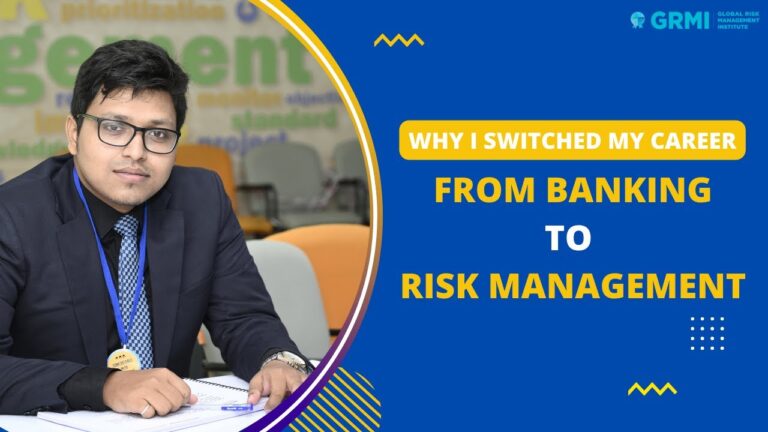
Case Study: Career Transition to Risk Management – Arnab Basak’s Journey
Arnab Basak, a PGDTRM student from the July 2021-22 batch, shares his inspiring career shift story. While working in the banking sector, Arnab developed a keen interest in risk management. Seeking to deepen his expertise, he chose the GRMI–NU PGDTRM programme to pivot his career toward this dynamic field.
His experience highlights how the programme supports professionals from diverse backgrounds in gaining specialised skills and industry-ready knowledge. Through GRMI’s focused curriculum and practical exposure, Arnab successfully transitioned into risk management, demonstrating the programme’s role in enabling meaningful career changes.
Watch Arnab’s story and learn how GRMI helped him redefine his professional path:
Why Choose PGDRM?
- Comprehensive Curriculum: Covers major risk disciplines, including credit, market risk, and modelling.
- Practical Exposure: Offers internships for hands-on learning in real organisations.
- Placement Support: Alumni report successful placements in risk and finance roles.
Who Should Consider PGDRM?
- New graduates aiming for specialised finance and risk roles.
- Early-career professionals seeking structured skill development.
- Applicants desiring intensive classroom learning coupled with practical experience.
Core Learning Areas in Financial Risk Management
- Risk Identification and Evaluation: Understanding financial risk types aligned with organisational goals.
- Quantitative Risk Techniques: Measuring risks with probability, simulations, and statistical models.
- Market Risk: Managing price volatility in equities, bonds, and commodities using tools like VaR.
- Credit Risk: Assessing borrower creditworthiness and mitigation strategies.
- Liquidity Risk: Handling cash flow and sustaining financial obligations.
PGDRM includes these and more within a broader risk management framework covering strategy, governance, and analytics.
Career Opportunities After Financial Risk Management Courses
Graduates find roles such as:
- Risk Analyst, focusing on risk modelling and financial data analysis.
- Credit Risk Specialist, managing credit portfolios and default risks.
- Market Risk Analyst, analysing price fluctuations and portfolio impact.
- Enterprise Risk Manager, leading cross-functional risk management strategies.
Conclusion
Financial risk management courses open doors to strategic, analytical, and impactful careers in finance. They equip professionals to convert uncertainty into informed decisions. Whether through comprehensive diplomas like the PGDRM at GRMI or shorter certificates, these courses build essential expertise.
FAQ's
Q1: What qualifications are required for financial risk management courses?
Ans: Most diploma and postgraduate courses require a bachelor’s degree; some accept relevant experience.
Q2: Can non-commerce graduates pursue financial risk management?
Ans: Yes, many programs, including PGDRM, admit diverse academic backgrounds with bridging modules.
Q3: How long do these courses typically last?
Ans: Short certificates can last weeks or months; diplomas like PGDRM usually take one year full-time.
For any queries, please fill out the form
You may also like

Start Finance Career After Graduation Without MBA