

FRM Certification Course: Meaning, Syllabus, Career Scope & Benefits
- Posted by GRMI
- Categories Blog, pgdrm blog
- Date December 15, 2025
FRM Meaning in Finance: Why It Matters
Author: Aanchal
This blog explains the meaning of FRM (Financial Risk Management), its curriculum, and its importance in global finance and risk careers. It covers key FRM subjects like market risk, credit risk, quantitative analysis, and financial instruments, along with its growing demand across banks, investment firms, and corporate sectors. The article also discusses real-world relevance through risk failures like the JPMorgan “London Whale” case and highlights how structured programmes like GRMI’s PGDRM can support practical learning and serve as a strong foundation for FRM aspirants.
FRM stands for Financial Risk Management, a professionally recognised title in the international finance and risk community.
The FRM meaning refers to a qualification showing expertise in financial, market, credit, operational, and liquidity risks. It also develops analytical skills to measure, monitor, and manage these risks effectively. FRM holders work in banks, investment firms, insurance companies, regulators, and corporate treasuries. This highlights its global acceptance.
Globally, tens of thousands of professionals hold this qualification. Leading employers often list it as a preferred credential for risk roles. Put simply, what is FRM? The FRM signals to employers and stakeholders that the holder has strong competence in financial risk management. Its recognition, practical focus, and relevance to modern risk practices makes FRM certification highly respected worldwide.
Basic Elements of FRM: What FRM Entails
The FRM curriculum spans technical and practical subjects. Main areas include:
- Risk Management Foundations
Risk frameworks, definitions of market, credit, operational, and other risks. Importance of risk management in corporate finance. - Quantitative Analysis
Statistical tools, risk measurement, probabilities, distributions, stress testing, Value at Risk (VaR), and other risk metrics. - Financial Markets and Products
Understanding financial instruments, derivatives, bonds, loans, and securities, including pricing, trends, and associated risks. - Valuation and Risk Models
Techniques to value products, model risk, and simulate potential losses under stress scenarios. - Risk Management Application
Apply theory to practice: market, credit, operational, liquidity, interest-rate, and FX risks, plus integrated risk management. FRM holders help banks, institutions, asset management firms, and corporate treasuries identify and mitigate financial risks.
Why FRM Matters: The Value of Financial Risk Expertise
- Specialised Risk Competency Recognition
FRM demonstrates that professionals meet rigorous standards and possess strong knowledge of risk management. Employers value FRM holders in banking, asset management, regulatory compliance, and corporate finance roles.
- Versatility Across Sectors
Risk exists in almost every industry. FRM holders can manage credit, market, and liquidity risks across sectors. - Real-World Applicability and Labour Market Fitness Volatile markets require professionals who can anticipate risks and design mitigation measures. FRM signals readiness.
Case Study: JPMorgan “London Whale” Incident — Risk Management in Action
In 2012, JPMorgan faced a $6.2 billion trading loss due to complex credit derivatives, famously called the “London Whale” incident.
The losses occurred because large trades were taken without fully understanding the risk exposure. Weak controls, poor risk assessment, and delayed reporting amplified the impact.
This case highlights the need for strong risk analytics, stress testing, and continuous monitoring. It also shows how effective risk governance and timely intervention can prevent small errors from becoming massive financial losses.
For FRM aspirants or risk management students, this demonstrates how both technical skills and practical risk oversight are critical in high‑stakes environments.
This example shows that knowing risk in theory is not enough—practical training and structured exposure, such as that offered by PGDRM, prepare professionals to handle high-stakes situations effectively
PGDRM and FRM: How GRMI Supports Risk Management Learning
Not everyone pursues FRM immediately, so GRMI offers the Post Graduate Diploma in Risk Management (PGDRM).
PGDRM is a classroom-based course that combines practical exposure, internships, and structured learning.
FRM aspirants benefit from PGDRM as it integrates financial risk with other risk areas, builds practical skills, and enhances industry readiness before attempting the FRM exam.
PGDRM Duration & Structure
A one-year full-time course with around 1,000 hours covering multiple risk management domains.
Curriculum Content
PGDRM covers financial risk, enterprise risk management, operational risk, IT and cyber risk, compliance, and data analytics.
Why PGDRM Matters
It provides hands-on training, case studies, internships, and real-world exposure. The programme offers hands-on training, live case studies, and industry internships. In 2025, it achieved a 98% placement rate with top companies.
PGDRM develops job-ready risk-management skills, provides exposure to real-world projects, and complements or serves as an alternative to FRM.
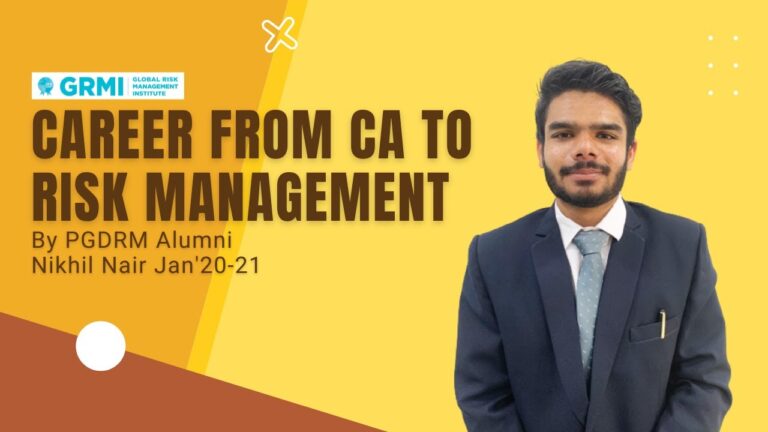
Watch this video for more insights:
Conclusion
FRM, or Financial Risk Management, is essential for careers in finance, banking, consulting, and corporate treasury. It equips professionals to measure, model, and manage financial risk, supporting long-term organisational stability. For structured, practical education across all risk areas, the PGDRM at GRMI offers a broad-based, hands-on approach. It covers FRM content while introducing additional risk domains, preparing students for diverse risk roles.
FAQ's
Q1. What is the full form of FRM?
Ans: FRM stands for Financial Risk Manager.
Q2. What does FRM involve?
Ans: It covers theory and practical skills in quantitative analysis, financial markets, valuation-risk models, and risk measurement.
Q3. What is the certification body for FRM?
Ans: FRM is issued by a global professional body that maintains standards for risk. management practitioners.
For any queries, please fill out the form
Tag:Frm meaning
Courses After BCom With Highest ROI: Best Career Paths for High Growth
You may also like

Risk Appetite vs Risk Tolerance: Guide for 2026

Best 1-Year Courses After Graduation in 2026

