Top Specializations in IT Diploma Courses & Career Scope
- Posted by GRMI
- Categories Blog, pgdtrm blog
- Date May 22, 2026
Top Specializations in IT Diploma Courses & Career Scope
This blog explores the top specializations in Information Technology diploma courses, including Cybersecurity, Data Science, Artificial Intelligence, Cloud Computing, and Software Development. It explains the scope of an IT diploma specialization, key skills required, and career opportunities across industries.
The blog also highlights emerging areas like cyber security diploma and advanced industry-focused programmes such as PGDTRM, helping students understand how to build a strong career path in the IT sector.
Top Specialisations in Information Technology Diploma Course
A Information Technology diploma is a foundational programme designed to equip students with practical and theoretical knowledge in computer systems, software development, networking, and data management.
The course focuses on building technical skills required to work in today’s fast-growing digital and technology-driven world. A Diploma in IT or a Diploma in Information Technology prepares students for entry-level roles in the IT industry as well as further advanced studies in technology and computing fields.
Role of Information Technology
Information technology plays a critical role in modern industries by enabling communication, data processing, automation, and innovation. IT professionals design and manage systems that help businesses operate efficiently, securely, and at scale. From small startups to global enterprises, IT supports every function including operations, finance, marketing, and customer service.
Why Information Technology is Important Today
- Global Connectivity: IT enables instant communication and collaboration across the world.
- Business Efficiency: It improves productivity, reduces operational costs, and streamlines processes.
- Innovation and Growth: IT drives advancements in AI, cloud computing, automation, and digital transformation.
Importance of Information Technology
- Bridges Digital Gaps: Connects people, systems, and organizations globally.
- Enhances Decision-Making: Enables data-driven insights for better strategies.
- Drives Digital Transformation: Supports automation and smart technologies across industries.
Top specialisations in Information Technology Diploma Courses
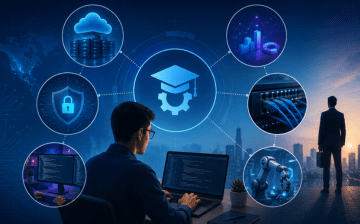
Diploma in Information Technology students can choose from various specialisations based on their interests and career goals. An IT diploma specialization helps students align their learning with industry demands and future career paths in technology.
These specialisations help learners focus on specific domains of the IT industry:
1. Cybersecurity diploma
Focuses on protecting systems, networks, and data from cyber threats, hacking, and unauthorized access.
2. Data Science
Deals with analyzing large datasets to extract meaningful insights for business decision-making.
3. Artificial Intelligence (AI)
Involves designing intelligent systems that simulate human thinking and decision-making.
4. Machine Learning (ML)
Focuses on developing algorithms that allow systems to learn and improve automatically from data.
5. Cloud Computing
Covers cloud platforms, storage, virtualization, and managing scalable IT infrastructure.
6. Web Development
Involves building websites and web applications using frontend and backend technologies.
7. Mobile App Development
Focuses on creating applications for Android and iOS platforms.
8. Network Engineering
Deals with designing, managing, and maintaining computer networks and communication systems.
9. Database Management
Focuses on storing, organizing, and managing structured data using database systems like SQL.
10. Software Development
Involves designing, coding, testing, and maintaining software applications for various platforms.
11. Internet of Things (IoT)
Focuses on connecting smart devices and enabling data exchange between systems.
12. Blockchain Technology
Deals with decentralized systems used for secure transactions and data integrity.
13. PGDTRM (Technology Risk Management) – Industry-Oriented specialisation
The Post Graduate Diploma in Technology Risk Management (PGDTRM) offered through the collaboration of Global Risk Management Institute and NIIT University is a specialized, industry-focused programme designed for students who want to build careers in technology risk, cybersecurity, IT governance, and risk consulting.
This programme focuses on the growing importance of managing risks in digital systems, including cybersecurity threats, data protection challenges, and IT control frameworks used in modern organizations.
PGDTRM is structured as a 1-year full-time programme, which includes 6-month classroom learning followed by a 6-month paid internship, providing both academic understanding and real-world exposure to industry environments.
Key Areas Covered:
- IT risk and cybersecurity fundamentals
- IT governance and control frameworks
- Data protection and compliance systems
- SOC, ITGC, and audit concepts
- Enterprise risk management applications
- Real-world case studies and corporate simulations
Career Opportunities After PGDTRM:
- Technology Risk Consultant
- Cyber Risk Analyst (especially after a cybersecurity diploma specialization)
- IT Audit Associate
- Risk Advisory Specialist
- Data Privacy Analyst
- Enterprise Risk Associate
This specialisation is highly relevant for students aiming to enter Big 4 firms, consulting companies, and global IT risk advisory roles.
Conclusion
A Diploma in Information Technology provides a strong foundation for students aiming to enter the IT industry early. With multiple specialisations available, learners can choose fields aligned with their interests such as cybersecurity, AI, data science, or software development. These specialisations open doors to diverse career opportunities in both national and global tech markets, making IT one of the most dynamic and future-ready career paths.
FAQ's
A Diploma in Information Technology is a 2–3 year programme that provides foundational knowledge in programming, networking, databases, and software development.
An Information Technology diploma course offers strong career opportunities in software development, networking, cybersecurity, web development, and IT support roles.
Popular specialisations include Cybersecurity, Data Science, Artificial Intelligence, Machine Learning, Cloud Computing, Web Development, and Software Development.
Yes, diploma holders can work as software developers, network technicians, IT support engineers, web developers, and data analysts in various industries.
The PGDTRM programme offered by Global Risk Management Institute in collaboration with NIIT helps students gain practical knowledge in technology risk, cybersecurity, IT governance, and compliance through industry-focused learning, case studies, and internship exposure, preparing them for roles in consulting and risk advisory firms.
You may also like

Best Post Diploma Courses in India for 2026

Best IT Diploma Courses with Highest Job Demand in 2026